Table of Contents
ToggleMost indoor gardeners think of insects as the enemy. Spider mites, mealybugs, and aphids do real damage to houseplants, and a sudden infestation can feel like a crisis. But beneficial insects offer a smarter, chemical-free way to keep your plants thriving. These tiny allies work 24/7 to hunt pests, clean your soil, and maintain the microbial balance that healthy indoor plants depend on. Whether you’re dealing with a pest problem or building resilience into your collection, introducing beneficial bugs is a practical, long-term solution that professional growers and serious hobbyists rely on.
Key Takeaways
- Beneficial bugs for indoor plants create a self-regulating pest control system that eliminates the need for chemical pesticides and manual intervention.
- Ladybugs and lacewings are the top predatory insects for indoor gardens, with a single ladybug consuming 50–60 aphids daily and lacewing larvae reliably establishing in stable environments.
- Springtails and soil mites maintain soil health by breaking down dead matter and fungi, signaling a healthy growing environment with proper drainage and humidity.
- Maintain temperatures between 68–75°F, humidity of 40–60%, consistent soil moisture, and a thin layer of organic mulch to create conditions where beneficial insects thrive.
- Release 100–300 beneficial insects for active pest problems or 25–50 for prevention in established collections, waiting at least 2 weeks after any pesticide application.
- Monitor pest decline over 3–4 weeks rather than expecting immediate results, as parasitic wasps and predators work gradually to suppress pest populations.
Why Beneficial Insects Matter for Indoor Plant Health
Indoor plants live in a closed ecosystem. Unlike outdoor gardens with their natural population of predatory insects, your potted plants are isolated, and pest populations can explode without competition. This is where beneficial bugs become invaluable.
Predatory insects like ladybugs and lacewings actively hunt soft-bodied pests. Parasitic wasps lay eggs inside pest insects, killing them from within. Springtails and soil mites break down dead plant matter and fungi, aerating the soil and improving nutrient uptake. Together, they create a self-regulating system that reduces the need for pesticides or frequent manual intervention.
The advantage goes beyond pest control. A healthy bug population signals a healthy growing environment, good drainage, appropriate humidity, and stable temperatures. When beneficial insects thrive, your plants thrive. You’ll notice stronger growth, better leaf color, and fewer stress-related problems. This approach aligns with how to get rid of gnats from house plants through integrated pest management rather than reactive chemical spraying. Think of beneficial bugs as living insurance for your indoor garden.
Ladybugs: Your Plant’s Natural Pest Control Squad
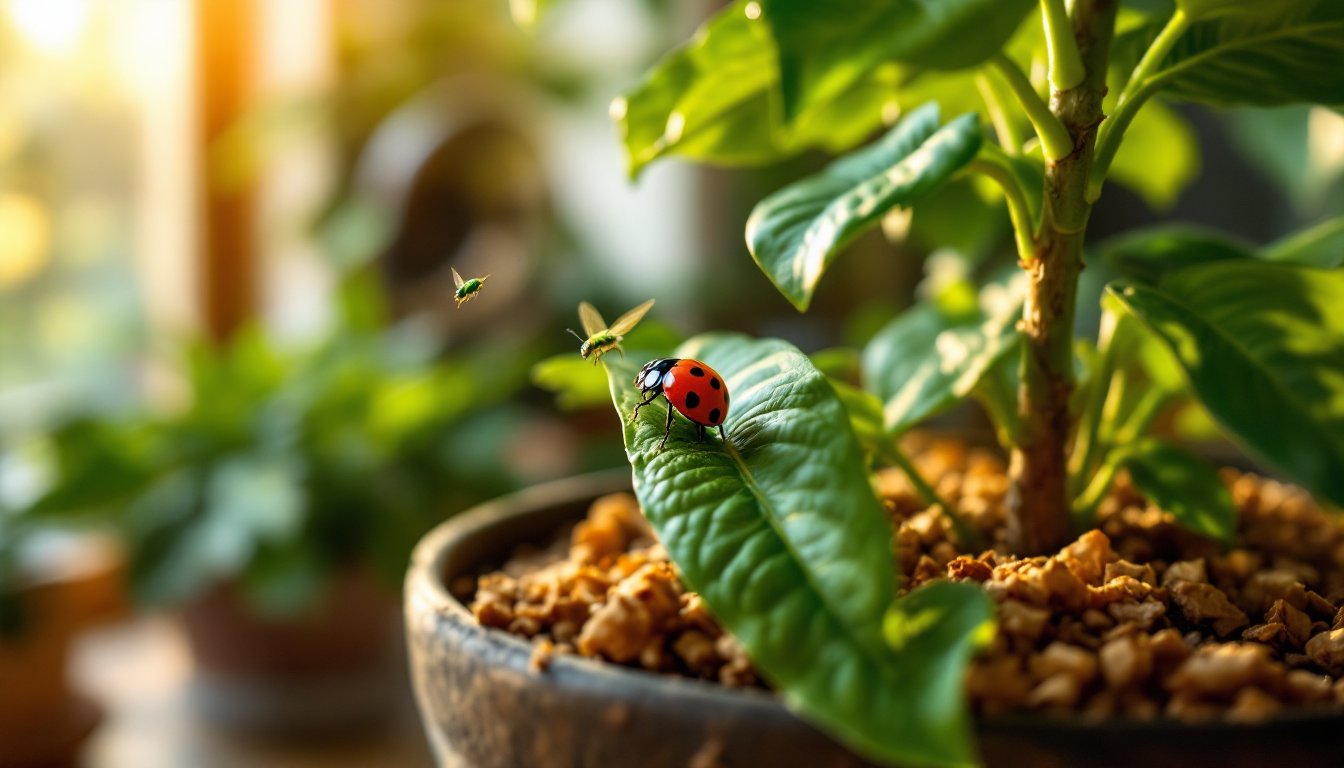
Ladybugs (family Coccinellidae) are the heavy hitters of pest control. A single ladybug can eat 50–60 aphids per day, and their larvae are even more voracious predators. They also hunt mealybugs, scale insects, and spider mites, the trinity of indoor plant problems.
Adult ladybugs are easy to recognize: bright red or orange wing covers with black spots, about ¼-inch long. They live 2–3 years and will lay eggs near pest colonies, establishing a multi-generational population if conditions are right. The larvae look completely different, spiky, grayish-black, and roughly ⅛-inch long, so new gardeners sometimes mistake them for pests and remove them by accident. Don’t. These larvae are voracious and do most of the actual hunting work.
Indoor ladybugs need moderate humidity (40–60%), temperatures between 65–75°F, and access to pollen or nectar if pest populations run low. Some growers release 100–500 ladybugs per growing space, depending on infestation severity. They’ll stick around if food is available, but if you’re using them for prevention in a healthy plant collection, they may disperse or go dormant. You can purchase beneficial insects online: reputable suppliers ship them in mesh bags with sawdust or paper bedding to keep them calm during transit.
Lacewings and Parasitic Wasps: Silent Protectors
Green lacewings (Chrysopidae family) are understated heroes. Adults are delicate, ½-inch-long insects with translucent green wings and golden eyes. They’re gentle to handle (won’t bite or sting) and feed on pollen, nectar, and small insects. But their larvae, tiny alligator-shaped creatures, are relentless predators, consuming mealybugs, aphids, whiteflies, and scale crawlers at a rate that rivals ladybugs.
Lacewing populations establish and self-sustain more reliably than ladybugs in stable indoor environments. They prefer temperatures around 70–75°F and moderate humidity. If you release them near plants with pest issues, the adults lay eggs in safe spots, and the larvae hatch into a localized cleanup crew. One common challenge: lacewing adults sometimes wander toward windows or lights, especially if the plant area feels isolated.
Parasitic wasps (Braconidae and Ichneumonidae families) take a different approach. These tiny wasps, some barely visible to the naked eye, lay eggs inside or on pest insects. The wasp larvae develop inside the host, eventually killing it. They’re highly specific: some target aphids, others whiteflies, others scale insects. You won’t see them working (they’re that small), but you’ll notice a decline in pests over 2–4 weeks. Parasitic wasps are slower-acting than predators but provide longer-term suppression. Unlike ladybugs, they’re docile and pose zero risk to humans or pets. Resources like Sunset and gardening communities discuss specific wasp species for different pest targets.
Springtails and Soil Mites: The Underground Cleanup Crew
Not all beneficial bugs are hunters. Springtails (Collembola order) and soil mites (Acari order) are detritivores, they eat dead plant matter, fungi, and mold. While they don’t directly kill pests, they maintain soil health, prevent fungal overgrowth, and create conditions where predatory bugs thrive.
Springtails are 1–5mm long, pale or dark-colored, and identifiable by their fork-like tail (the “spring”) that launches them when disturbed. They’re harmless to plants and humans, and they’re usually present naturally in moist soil. If you notice springtails in your indoor plant collection, it’s a sign of good soil structure and balanced moisture, not an infestation. Populations self-regulate based on available food.
Soil mites work similarly. Predatory mites like Phytoseiulus actively hunt spider mites, while detritivorous mites break down organic matter. Both types indicate a healthy soil ecosystem. Unlike springtails, certain soil mites (spider mites) are pests: the distinction matters. Predatory mites are slightly larger, faster-moving, and have different body shapes than pest spider mites. When building a soil microbiome indoors, introducing a balanced population of beneficial mites alongside good moisture management and organic mulch (a thin layer of bark or coir) creates a self-cleaning system. This approach reduces disease, improves drainage, and supports the aboveground predators like beautiful house plants thrive in.
You generally don’t “buy” springtails and soil mites the way you do ladybugs: they arrive naturally in quality potting soil or can be introduced via purchased cultures if your collection is sterile.
How to Attract and Maintain Beneficial Bugs Indoors
Creating the Right Environment
Beneficial insects need stable conditions to thrive. Start with temperature: most beneficial bugs perform best at 68–75°F. Humidity between 40–60% supports predators and keeps soil mites active. Poor air circulation promotes mold, which kills beneficials, so a small oscillating fan on low (away from plants) helps without creating harsh drafts.
Lighting matters too. Beneficial insects follow natural day-length cues. If your plants are under grow lights, ensure lights run 12–16 hours daily on a timer. If plants sit in ambient houslight, most beneficial bugs adapt fine.
Water and food are critical. Keep soil consistently moist but not waterlogged: soggy soil kills springtails and predatory mites. Introduce a thin ½-inch layer of organic mulch (aged bark, coconut coir, or composted leaves) to the soil surface. This provides hiding spots, regulates moisture, and supplies detritivorous insects with organic matter to feed on. Every 4–6 weeks, add a light dusting of pollen or finely ground oat flour near the base of plants. This keeps beneficial insects fed even if pest populations drop, think of it as life support between hunts.
Plant diversity supports beneficial populations. Most common house plants like pothos, philodendrons, and peace lilies offer varied leaf textures and microhabitats where different beneficial species hide and hunt. More variety = more stable populations.
When to Introduce Bugs Manually
You don’t always need to buy beneficial insects. If your indoor garden is established and you notice naturally occurring ladybugs or lacewings, congratulations, your environment is already attracting them. But if you’re fighting an active infestation or building a new collection from scratch, manual introduction accelerates results.
When to release beneficial insects:
- Active pest problem: Release immediately. Start with 100–300 predatory insects for a medium collection (10–20 plants). Larger collections (30+ plants) may need 500–1000.
- Preventive introduction: Release a smaller population (25–50 insects) into an established, pest-free collection to maintain balance.
- After pesticide use: Wait at least 2 weeks after any pesticide (even organic neem oil) before introducing beneficials. Residues kill the good bugs too.
Release beneficial insects in the evening when they’re less active and more likely to settle. Open the container gently near affected plants, or place it directly on the soil and let them crawl out. Avoid releasing into direct sunlight or onto dry foliage: they dehydrate quickly.
Order from reputable suppliers (search “beneficial insects” + your region). Established vendors ship insects in dormant or semi-dormant states in breathable containers, and most guarantee viability. Cost ranges from $15–$40 per shipment depending on quantity and species. Resources like Country Living and specialist growers offer sourcing guides.
Monitor for 3–4 weeks. You’ll see a gradual decline in pest activity, not an immediate wipeout. If pests persist after a month, you may need additional releases or a different beneficial species, different pests respond to different predators. How to get rid of gnats in house plants covers integrated strategies when single-species releases aren’t enough.