Table of Contents
ToggleNot every home or apartment has sun-soaked south-facing windows. If you’re working with a dimly lit bedroom, a basement office, or a hallway without natural light, you might think indoor plants are off the table. Think again. Low-light indoor plants are the practical solution for anyone who wants greenery without rearranging their entire living space. These hardy species don’t just survive in shadowy corners, they actually prefer it. Whether you’re dealing with apartments, interior rooms, or offices with only artificial lighting, the right low-light plants can transform any space into a thriving green environment.
Key Takeaways
- Good indoor plants for low light environments solve the common problem of dark rooms and spaces without direct sunlight, allowing you to add greenery to any area of your home.
- Pothos, philodendrons, snake plants, and ZZ plants are the top low-light indoor plants that thrive with minimal sunlight and are forgiving about watering schedules.
- Proper watering is critical for low-light indoor plants—water only when the top 1–2 inches of soil are dry, as these plants photosynthesize slowly and need less water than sun-loving varieties.
- Using pots with drainage holes and well-draining soil prevents root rot, the most common cause of indoor plant death.
- Low-light plants are naturally low-maintenance and adaptable to standard indoor temperatures (65–75°F) and humidity levels, making them ideal for busy homeowners and renters.
Why Low-Light Plants Are Game-Changers for Your Home
Low-light plants remove a major barrier to indoor gardening: the assumption that you need hours of direct sunlight. Unlike sun-worshipping succulents or tomatoes, these plants evolved in forest understories where dappled shade is the norm. That adaptation makes them ideal for modern homes where most interior spaces don’t get the 3–6 hours of direct sun that many plants demand.
From a practical standpoint, low-light plants let you decorate rooms that would otherwise feel empty. A tall pothos vine can soften a dark corner in your living room. A snake plant fits neatly on a bathroom shelf with no window. You’re not fighting biology when you choose the right species for the space you actually have.
They’re also lower-stress companions. Since they’re adapted to limited light, they’re generally forgiving about watering schedules and temperature fluctuations. You can find yourself traveling for work or dealing with a busy week without coming home to a wilted disaster. For busy homeowners and renters alike, that’s a genuine advantage.
Top Low-Light Indoor Plants That Thrive With Minimal Sunlight
Pothos and Philodendrons: Forgiving Vining Favorites
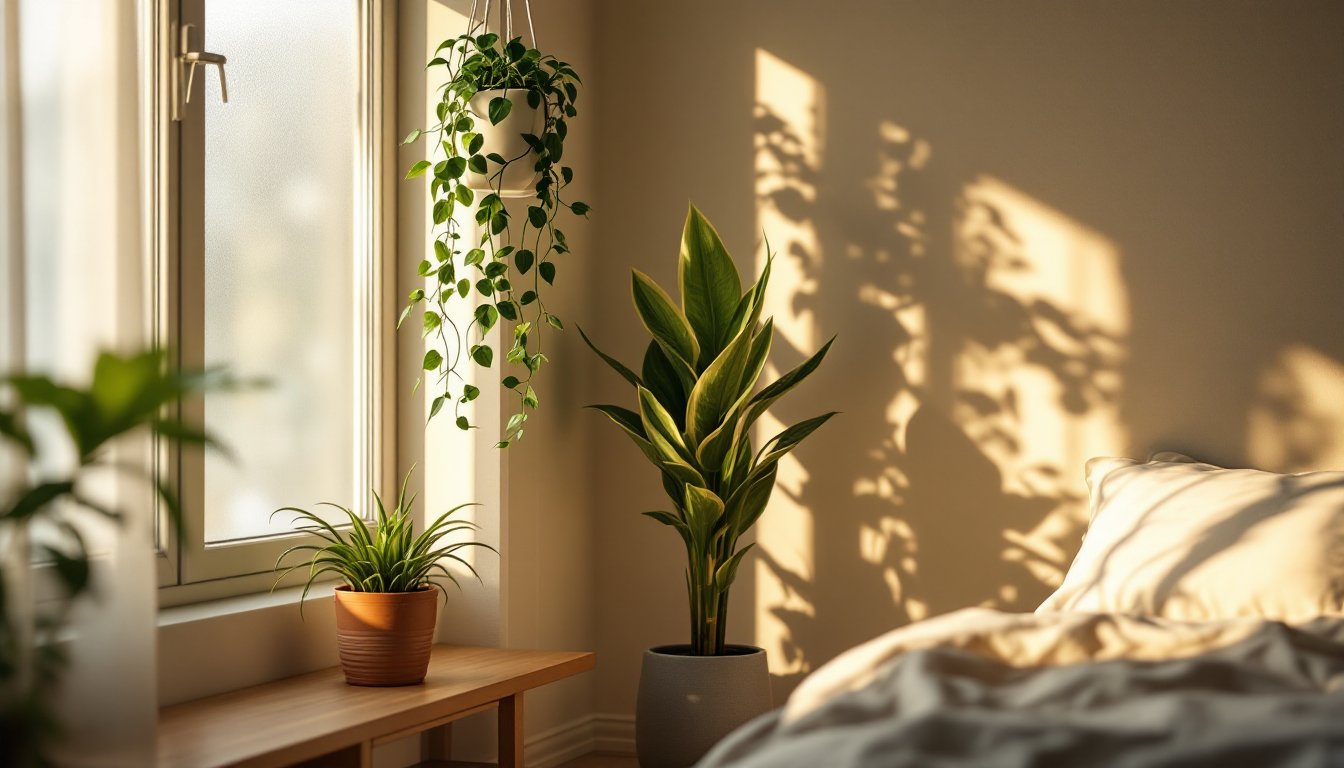
Pothos (Epipremnum aureum) and philodendrons are the workhorses of low-light indoor gardening. Both produce long, trailing vines with heart-shaped leaves and can handle extremely dim conditions, even offices lit only by fluorescent bulbs. Pothos grows faster and is slightly more forgiving if you forget to water. Philodendrons are a tick slower but come in more leaf variations.
These plants work as trailing vines from a shelf or hanging basket, or you can stake them vertically for a more structured look. Water when the top inch of soil feels dry to the touch. They’ll live happily in temperatures between 65–80°F. One note: both are mildly toxic to pets, so keep them out of reach if you have curious cats or dogs. Beautiful House Plants: Transform your home with these vining options as part of a larger green interior strategy.
Snake Plants and ZZ Plants: Low-Maintenance Powerhouses
Snake plants (Sansevieria trifasciata) are nearly indestructible. Their thick, upright leaves tolerate low light, infrequent watering, and temperature swings that would kill other plants. They also filter indoor air by removing toxins like formaldehyde and benzene, a genuine benefit beyond aesthetics. ZZ plants (Zamioculcas zamiifolia) work similarly, with glossy, compound leaves and a compact, architectural form. Both propagate easily from leaf cuttings if you want to expand your collection.
The main care rule: water sparingly. Overwatering kills both plants faster than neglect. Allow soil to dry out completely between waterings, typically every 2–3 weeks depending on your indoor temperature and humidity. They’ll survive in indirect light, artificial light, or even near-dark corners. Cheap House Plants: Transform your budget while building a reliable collection of these affordable, long-lasting varieties.
Essential Care Tips for Low-Light Indoor Plants
Even forgiving plants benefit from intentional care. Start with container and soil prep. Use a pot with drainage holes, this is non-negotiable for preventing root rot, the number-one killer of indoor plants. Standard potting soil works for most low-light species, though snake plants and ZZ plants prefer a grittier mix (add perlite or coarse sand to improve drainage).
Watering is where many people struggle. Low-light plants photosynthesize more slowly, so they need less water than sun-loving plants. As a rule, water when the top 1–2 inches of soil are dry. Stick your finger in: don’t guess. In winter, when growth slows, water even less frequently. Cold, wet roots in a dormant plant are a recipe for fungal problems.
Humidity and temperature matter but don’t require fussing. Most low-light plants tolerate standard indoor humidity (30–50%) just fine. Keep them away from heating vents and air conditioners, which dry out air and create temperature swings. A range of 65–75°F is ideal, though these plants tolerate 55–85°F without complaint.
Fertilizing is simple: use a diluted, balanced fertilizer (10–10–10 NPK) during the growing season (spring and summer), roughly every 4–6 weeks. Stop or reduce feeding in fall and winter. Too much fertilizer won’t help plants in low light grow faster, it’ll just accumulate in the soil and damage roots.
Consider that Most Common House Plants: Transform your understanding of which varieties need what. Dust leaves occasionally with a soft cloth or gentle spray of lukewarm water. Dusty leaves can’t photosynthesize as effectively, even under low light. For a comprehensive guide on plant varieties suited to different homes, The Spruce offers detailed care profiles for hundreds of species. Over time, you’ll develop an intuition for what your specific plants need in your specific spaces.
Conclusion
Low-light indoor plants aren’t a consolation prize for dark spaces, they’re a smart, practical choice for real homes with real layouts. Pothos, snake plants, ZZ plants, and philodendrons give you reliable greenery without demanding sunlit windowsills or constant fussing. Choose the right species for your light conditions, nail the watering rhythm, and you’ll have a thriving collection that actually improves your living environment. Start with one hardy plant, learn its preferences, then expand from there.