Table of Contents
ToggleGetting indoor plants to thrive without a south-facing window isn’t witchcraft, it’s just understanding what light for indoor plants actually means. Many growers underestimate how much light their greenery really needs, then wonder why their pothos looks sad or their succulents get leggy. The good news is that modern grow technology has made it easier than ever to supplement natural light or replace it entirely. Whether you’re working with a corner apartment, a basement workspace, or just want to expand beyond your brightest rooms, this guide walks you through picking the right light setup, placing it correctly, and dialing in the duration to keep your plants flourishing year-round.
Key Takeaways
- Light for indoor plants falls into three categories based on intensity—low (100–200 foot-candles), medium, and high (300–500+ foot-candles)—so understanding your plant’s specific requirement is the first step to healthy growth.
- A hybrid approach combining natural light with affordable LED grow lights gives you flexibility and control; a simple 40–50-watt LED shop light on a timer costs $80–120 and can support 15–20 small plants.
- Maintain proper light distance (6–12 inches above the plant canopy) and duration (12–16 hours daily) since intensity drops sharply with distance and consistent photoperiod triggers active growth and flowering.
- Most indoor plant problems trace back to inadequate light, so prioritizing the right light setup unlocks better foliage color, compact growth, and faster development.
- Use timers, adjustable mounting, and reflective surfaces to optimize your light setup, and rotate plants weekly to ensure even growth rather than stretching toward the light source.
Understanding Light Requirements for Common Indoor Plants
Before shopping for lights or rearranging furniture, figure out what your plants actually need. Light requirements fall into three buckets: low, medium, and high. This matters because plants use light for photosynthesis, and without enough of it, they’ll stretch, pale out, or just sit there. The catch is that “bright indirect light” or “medium light” means different things to different growers.
Low-Light Tolerant Plants
Low-light plants like pothos, snake plants, and ZZ plants can survive on 100–200 foot-candles (a foot-candle measures light intensity at one foot away). These work great in offices, hallways, or corners where natural light is weak. Tolerate doesn’t mean thrive, though, they’ll grow slower, but they won’t die. Most of these plants evolved on forest floors where dappled light filtered through a canopy. If you’re relying on a single north-facing window or just ambient room light, these are your friends.
High-Light Plants and Succulents
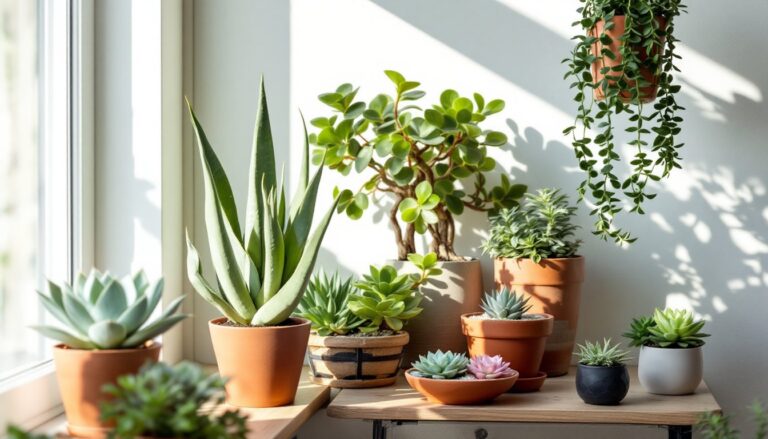
Succulents, cacti, and plants like echeveria, aloe, and jade need 300–500 foot-candles or more. Flowering plants, think African violets, begonias, and peppers, also crave intensity. These plants evolved in open sun, so they expect it. A south-facing windowsill works for them, but a basement setup or dimly lit shelf won’t cut it. If you’re growing food indoors (herbs, peppers, lettuce), assume you’ll need supplemental light unless you have genuinely bright natural light for at least 12–14 hours daily.
Natural vs. Artificial Light: Which Works Best
The short answer: natural light is free and plants evolved with it, but artificial light is flexible and often more practical. Here’s the real breakdown.
Natural light wins on intensity and spectrum. A south-facing window in summer can deliver 300+ foot-candles during midday, and sunlight includes wavelengths across the full spectrum. The problem is that it’s inconsistent, it changes with season, time of day, weather, and building location. A north-facing window in winter? You’re looking at maybe 50 foot-candles on a cloudy day. If you’re in a cold climate, you’re also fighting low angles and short days from October through March.
Artificial grow lights give you control. You choose the intensity, spectrum, and duration, and it stays the same every day. LED grow lights have gotten cheaper and more efficient since 2020, pulling 30–60 watts while mimicking the full spectrum. A 10-piece collection of curated grow lights shows the range from basic shop lights to fancy smart models. The trade-off is upfront cost and electricity use, though LEDs have cut that in half compared to older HPS or fluorescent fixtures.
For most DIY growers, the answer is hybrid: use natural light when you’ve got it (windowsill plants, bright rooms), and fill gaps with a grow light. A sunny south window plus a light timer on a shelf below? That’s enough for dozens of plant varieties. A basement corner with zero windows? You’ll want a dedicated setup.
Choosing and Setting Up Grow Lights for Indoor Gardens
If you’re buying grow lights, start with your plants’ actual needs, not buzzwords like “full spectrum” (they’re all pretty similar now).
Choose by wattage and coverage area. A 30-watt LED shop light covers roughly 2–3 square feet and costs $20–40. A 60-watt fixture handles 4–6 square feet and runs $40–80. If you’re growing a small shelf of plants, go modest. If you’re building a herb garden or propagation station, size up. Check the product specs for “coverage area at 12 inches”, that’s your baseline.
Pick the right color spectrum. Most “full spectrum” lights are fine for vegetative and flowering growth. Blue spectrum (5,000K–6,500K color temperature) pushes compact vegetative growth: red (2,700K–3,000K) encourages flowering. If you’re buying one light, aim for 4,000K–5,000K (neutral white) as a compromise. Retailers oversell this stuff, your plants care way more about total light quantity and duration than whether you’re running 5,200K or 5,500K.
Installation basics:
- Hang the light 6–12 inches above the canopy (lower for seedlings, higher for mature plants). Adjust as they grow.
- Use an adjustable chain or bracket so you can raise it without uprooting things.
- Mount it securely, a clamp light tipping over and breaking a plant is a bad day.
- Plug into a basic timer (mechanical or digital, $8–15) so you don’t have to remember it daily.
- Check for heat buildup. LEDs run cool, but a reflective surface behind them can concentrate warmth. Plants like 65–75°F.
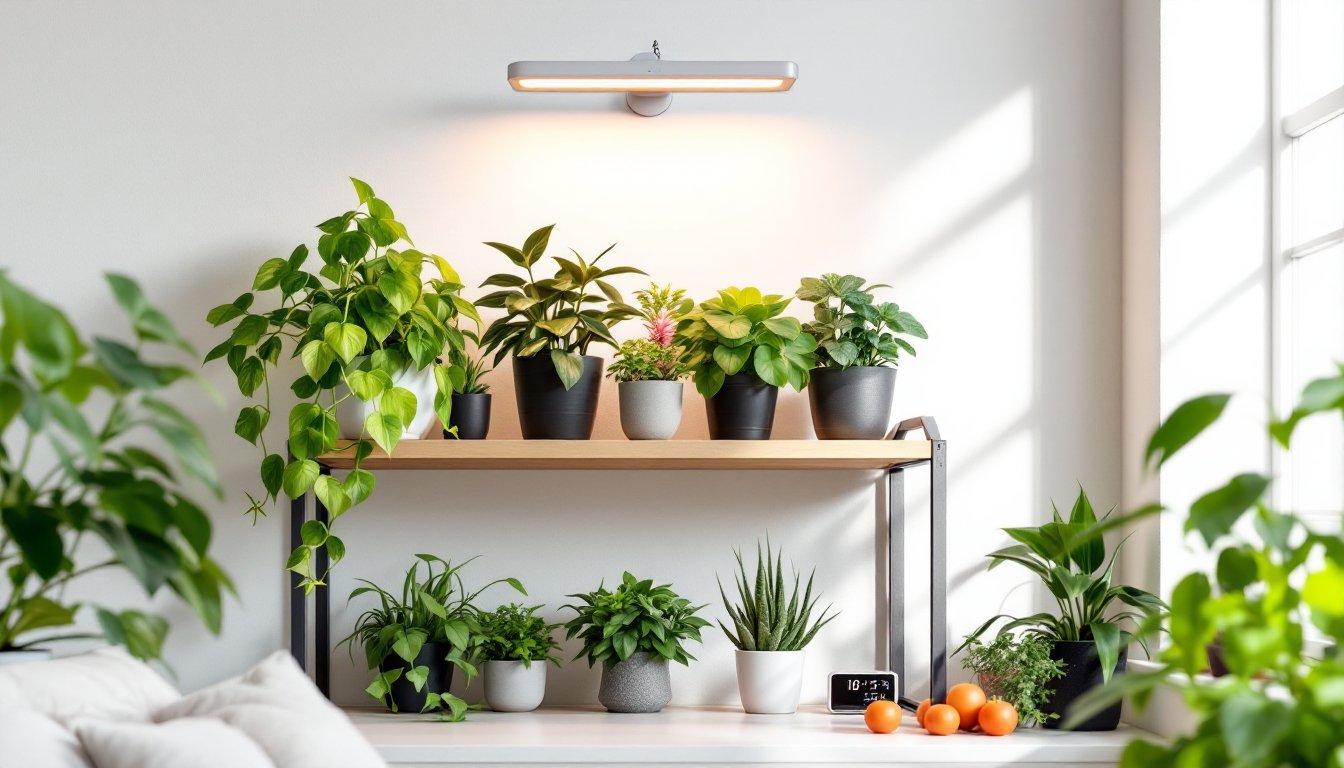
A simple setup for most hobbyists: one 40–50-watt LED shop light on a timer, hung above a 2-tier shelving unit. Total cost, maybe $80–120. It’ll handle 15–20 small to medium plants without breaking the budget.
Optimizing Light Placement and Duration for Healthy Growth
Having the right light means nothing if it’s in the wrong place or on for the wrong amount of time. These two things trip up a lot of growers.
Distance and intensity go hand-in-hand. Light intensity drops sharply with distance, it follows an inverse-square law, which means moving a light from 6 inches to 12 inches cuts the intensity to about a quarter. If your plants are bleaching out or burning (you’ll see pale, papery leaves), move the light up. If they’re stretching toward the light or growing slowly, move it closer. Aim to keep the most common house plants at a distance where you can comfortably hold your hand under the light for 30 seconds without it feeling hot.
Duration (photoperiod) matters as much as intensity. Most plants need 12–16 hours of light daily to grow actively. Seedlings and vegetables want closer to 14–16 hours. Established foliage plants can do fine on 12 hours. Flowering plants sometimes need a period of darkness to trigger blooms (some need long nights in fall to flower properly, like poinsettias). A timer makes this effortless, set it and forget it. Switching a light on and off by hand leads to inconsistency and dead plants when you’re on vacation.
Placement tips:
- Position lights directly above or slightly angled toward the plant canopy. Side lighting works, but you’ll get uneven growth.
- Rotate plants weekly if they’re near a grow light: they’ll lean toward it otherwise.
- Leave some space between plants so light reaches the lower leaves. Crowding them creates humidity pockets and blocks light.
- Consider reflective surfaces (white paint, mylar, or aluminum foil) on walls or shelves behind lights to bounce light back toward the plants and improve efficiency.
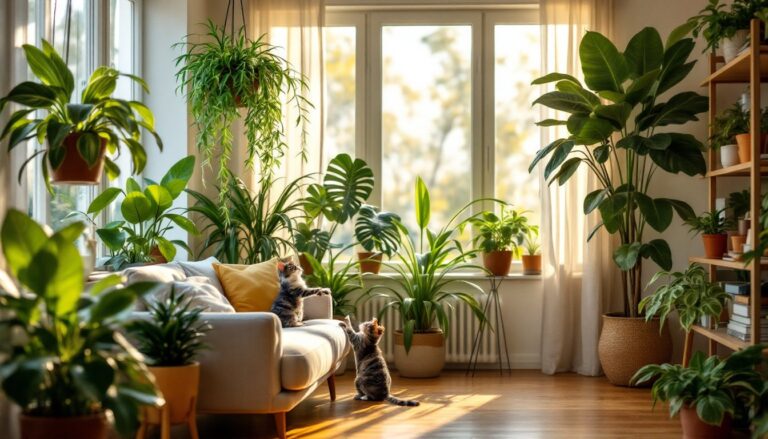
For indoor herb gardens or beautiful house plants on a windowsill with supplemental lighting, 14 hours of combined natural and artificial light is a solid target. Your setup will feel less like a grow room and more like a well-lit corner that just happens to make plants very happy.
Conclusion
Lighting isn’t mysterious once you stop thinking about it as a single factor and start seeing it as intensity, spectrum, and duration working together. Matching the light to your plants’ needs, using a hybrid natural-and-artificial approach where practical, and dialing in placement and hours of operation will transform your indoor growing. Start simple, measure results (watch for stretching, color, growth rate), and adjust. Most indoor plant struggles trace back to light, so getting this right unlocks everything else.