Table of Contents
ToggleIndoor flowering plants do more than fill a room with color, they clean the air, lift your mood, and prove that you don’t need a sprawling garden to enjoy blooms year-round. Whether you’re a seasoned gardener or someone who’s killed a cactus, there’s a flowering plant that fits your space and skill level. This guide walks you through the best indoor flowering plants available in 2026, why they matter, and exactly how to keep them thriving through every season.
Key Takeaways
- The best indoor flowering plants like orchids and anthuriums deliver year-round blooms and improve air quality while reducing stress and boosting productivity.
- Orchids thrive with minimal fuss when given bright indirect light, watered every 7–10 days with room-temperature water, and repotted annually with orchid bark to prevent root rot.
- Anthuriums are forgiving workhorses that bloom nearly year-round with bright indirect light, moderate humidity, and regular feeding every 3–4 months with balanced fertilizer.
- Most indoor flowering plants require 6–8 hours of bright indirect light daily, 50–60% humidity, and temperatures between 65–75°F to prevent bud drop and maintain continuous blooms.
- Choose the right plant by honestly assessing your home’s light conditions, humidity levels, and watering consistency—start with one blooming orchid or anthurium to build confidence before expanding.
Why Flowering Plants Transform Your Interior Space
Flowering plants do something no piece of furniture can: they create a living focal point. A blooming orchid on a shelf or an anthurium in a corner immediately shifts how a room feels. Beyond aesthetics, there’s science backing this up. Studies show that plants reduce stress, improve air quality by absorbing CO₂ and releasing oxygen, and can even boost productivity in home offices.
Flowering plants specifically offer one advantage over foliage-only options: they signal vitality. When something blooms indoors, it means your care routine is working. That’s a tangible win for most homeowners. Unlike outside gardens, indoor flowering plants work year-round, no seasonal downtime. You can have blooms in January, July, or December, depending on what you choose and how you manage light and temperature.
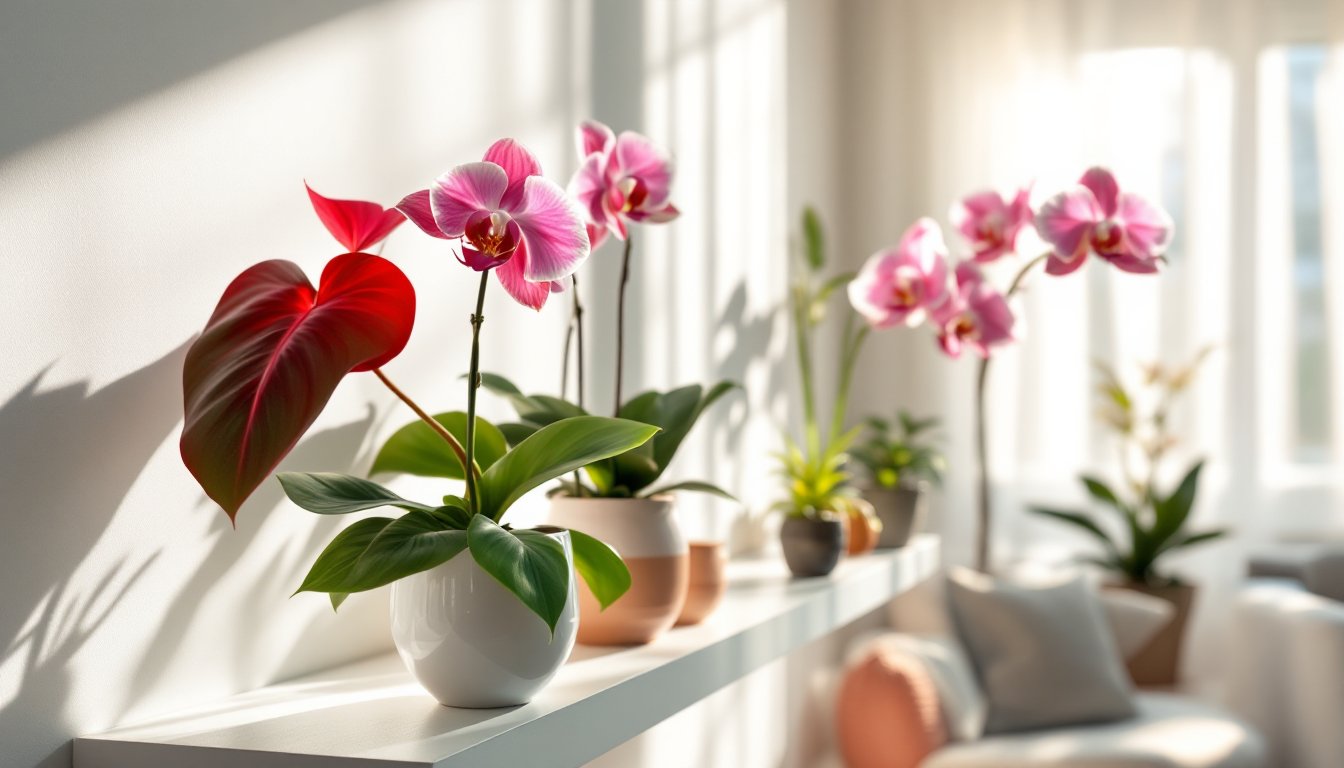
The psychological lift matters too. Morning light hitting a cluster of pink orchids or the bold red spathes of an anthurium genuinely improves how you feel walking through your home. That’s not sentimental, it’s documented in home environment research.
Top Blooming Plants for Indoor Gardeners
Orchids: Elegance and Low-Maintenance Beauty
Orchids have a reputation for being finicky, but modern varieties are far more forgiving than people think. Phalaenopsis orchids, the most common type you’ll find, bloom reliably indoors with minimal fuss. They’re native to tropical rainforests, so they prefer bright, indirect light (think an east or west-facing window with sheer curtains filtering the sun) and humidity around 50–70%.
Watering orchids correctly is the key. Let the roots almost dry between waterings, typically every 7–10 days depending on your home’s humidity. Overwatering kills more orchids than underwatering. Use room-temperature water and avoid hard tap water if possible, orchids prefer slightly acidic conditions. Repot every 1–2 years with orchid bark (a coarse medium, not regular potting soil) to prevent root rot.
Once an orchid finishes blooming, cut the flower spike above a node (the bumpy joint on the stem). New blooms often emerge from that point within weeks. With basic care, a single orchid can flower for 2–3 months, and you can cycle through multiple plants to have color continuously. Guides to growing flowering orchids often highlight beginner-friendly varieties like Phalaenopsis and Paphiopedilum.
Anthurium and Flamingo Flower: Bold Colors
Anthuriums, commonly called flamingo flowers because of their bold, waxy red, pink, or white spathes (the modified leaf, not the actual flower), are workhorses. They thrive in average indoor conditions and bloom nearly year-round if given enough light and humidity. They’re far more forgiving than orchids and reward consistency.
Place an anthurium in bright, indirect light and water when the top inch of soil feels dry, roughly every 5–7 days. Keep humidity moderate (40%+ is fine, though they prefer 60%+). Every 3–4 months, feed with a diluted, balanced fertilizer to encourage continuous blooming. Brown leaf tips signal either low humidity or salt buildup from tap water, use filtered or distilled water if possible, or run tap water through a basic pitcher filter.
Anthuriums’ blooms last 4–8 weeks per flower, and new spathes emerge constantly from the base if the plant is happy. They grow to about 1–2 feet tall indoors and fit comfortably on a shelf, desk, or side table. If you want plants that deliver color without drama, anthuriums are your answer.
Essential Care Tips for Year-Round Blooms
Light is the engine of flowering. Most indoor flowering plants need 6–8 hours of bright, indirect light daily. South-facing windows work best in winter: east or west-facing windows are ideal in summer (avoid the intense afternoon burn). If your home doesn’t have bright windows, a full-spectrum LED grow light on a timer (12–14 hours daily) will keep plants blooming reliably.
Humidity matters more indoors than many realize. Central heating and air conditioning dry out the air, which stress blooming plants and encourage spider mites. Group plants together (they humidify each other), set them on pebble trays filled with water (just don’t let pots sit in water directly), or use a small humidifier. Aim for 50%+ humidity, ideally 60%+.
Fertilizer shifts the balance toward blooming. Use a fertilizer higher in phosphorus (the middle number on the NPK ratio) to encourage flowers, something like a 10-30-20 formula. Apply at half strength every 2–3 weeks during the growing season (spring through fall), and reduce frequency in winter. Organic liquid fertilizers work well: so do diluted fish emulsion.
Temperature stability prevents bud drop. Most flowering houseplants prefer 65–75°F daytime and 10°F cooler at night. Sudden swings, drafts from windows or doors, or temperatures below 60°F can cause buds to abort. Keep plants away from heating vents, AC units, and cold windows in winter. Even a few hours of exposure to 50°F will damage tender buds.
Root health underpins everything. Use well-draining, aerated potting soil tailored to the plant type (orchid bark for orchids, peat-based mixes for anthuriums). Repot every 12–18 months to refresh the medium and give roots room. Water quality and soil pH matter, if your tap water is very hard, collect rainwater or invest in a basic water filter.
Choosing the Right Plant for Your Home
Start by assessing your light honestly. Don’t assume a room is bright enough just because you can read there without a lamp. Flowering plants are light-hungry. If your brightest window gets only 3–4 hours of direct sun, a grow light is mandatory, not optional. East or north-facing rooms are challenging: south or west-facing rooms are ideal.
Consider humidity next. Kitchens and bathrooms naturally stay moist (great for orchids and anthuriums). Living rooms and bedrooms with dry air require intervention, a humidifier, pebble trays, or misting helps. Some people struggle with consistent watering: others forget to water altogether. Orchids suit forgetful waterers (they like drying between waterings). Anthuriums need more regular moisture.
Budget and patience matter. Orchids are cheap to buy ($20–40 for a blooming plant) and last for years if cared for properly. Anthuriums cost $15–35 and also provide years of blooms. If you want instant gratification, buy established, blooming plants. If you want to save money, buy younger plants and wait 6–12 months for first blooms.
Space constraints are real. Large indoor house plants suit spacious rooms: orchids and compact anthuriums work on shelves or desks. Measure your space and account for growth, orchids stay compact, but some anthurium varieties spread. If you’re new to plants, start with one orchid or anthurium to build confidence before expanding. Success with one plant is the gateway to multiple plants.
Visit local nurseries or online retailers to see what’s available and blooming right now. Plants in active bloom adapt better to homes than dormant ones. The Spruce and Country Living offer detailed care guides specific to each variety once you’ve decided.
Conclusion
Indoor flowering plants are achievable for anyone willing to match the plant to their conditions. Orchids and anthuriums top the list because they’re reliable, long-lasting, and widely available. Start small, master light and humidity, and watch your home transform. Blooming plants aren’t a luxury, they’re a practical way to upgrade your environment year-round.