Table of Contents
ToggleIf you’ve ever brought home a beautiful potted plant only to notice tiny insects crawling around the soil weeks later, you’re not alone. Indoor plant pests thrive in standard potting soil, turning your green sanctuary into a breeding ground for gnats, mites, and fungal issues. The good news? Choosing the right soil mix makes a dramatic difference. The best soil for indoor plants isn’t just about drainage and nutrients, it’s about selecting formulations that naturally repel pests and minimize the conditions bugs need to survive. In 2026, the market offers more bug-resistant options than ever before, from sterilized mixes to specialized blends with pest-fighting ingredients. This guide walks you through identifying pest-prone soils, selecting naturally repellent mixes, and maintaining your indoor garden so bugs stay out for good.
Key Takeaways
- The best soil for indoor plants must be heat-sterilized (180°F or higher) to kill pest eggs, fungal spores, and disease before reaching your home.
- Standard potting soil attracts pests because its high organic content and moisture retention create ideal breeding conditions for fungus gnats, mites, and fungal issues.
- A DIY bug-resistant mix combining 40% sterilized peat, 30% perlite, 20% orchid bark, and 10% activated charcoal naturally repels insects and improves drainage.
- Bottom watering and allowing soil surface to dry between waterings dramatically reduces fungus gnat populations by eliminating the consistently wet conditions pests need.
- Refreshing the top 1-2 inches of soil every 6-8 months removes accumulated organic debris and dormant pest eggs, preventing reinfestation without chemicals.
- Sterilized potting mixes with added perlite, orchid bark, or diatomaceous earth create a less hospitable environment for soft-bodied pests while supporting healthy plant roots.
Why Regular Potting Soil Attracts Indoor Plant Pests
Standard potting soil is basically a buffet for indoor plant pests. Most conventional mixes contain composted bark, peat moss, or coconut coir, organic materials that decompose over time and create the warm, moist environment that fungus gnats, spider mites, and fungal issues love. When soil stays consistently damp (which happens in containers with limited air circulation), fungal gnats lay eggs in the top inch or two, and their larvae feed on decomposing organic matter. Thrips and mites thrive in the same conditions.
Characteristics Of Bug-Prone Soil
Watch out for these red flags in standard potting soils:
• High organic matter without heat treatment. Peat moss and uncomposted bark can harbor pest eggs and fungal spores from the manufacturing process.
• Poor drainage or overly dense texture. Soil that holds water creates anaerobic pockets where fungal diseases and gnats multiply.
• No added pest-fighting minerals. Basic mixes lack ingredients like perlite or diatomaceous earth that disrupt pest lifecycles.
• Unknown sourcing or non-sterilized ingredients. Budget soils sometimes skip the sterilization step, increasing contamination risk.
The frustration here is real: you water your plant correctly, the lighting is perfect, but suddenly you’re dealing with how to get rid of gnats from house plants. Often, the soil itself is the culprit. Generic potting soil doesn’t discriminate, it supports plant roots and pest colonies with equal enthusiasm.
Top Soil Mixes That Naturally Repel Insects
If you’re starting fresh or repotting, sterilized and treated potting mixes are your first line of defense. These formulations use heat, steam, or chemical treatment to kill existing pest eggs, larvae, and disease spores before the soil reaches your home.
Sterilized And Treated Potting Mixes
Heat-sterilized mixes are the gold standard. Look for labels stating the soil was heated to 180°F (82°C) or higher for at least 30 minutes. This kills fungal spores, insect eggs, and weed seeds without adding chemicals. Brands that specialize in this process (like Espoma Organic Indoor, Miracle-Gro Indoor, and Fox Farm) are widely available at garden centers.
Peat-based blends with added pest deterrents often include perlite, bark chips, or silica-based materials mixed in. These aren’t just there for drainage, the angular particles create a less hospitable environment for soft-bodied pests. A 70% peat-30% perlite ratio is a solid starting point for most houseplants.
Coconut coir soils have gained popularity as a peat alternative. They’re more sustainable and often come pre-treated. But, verify the product is pasteurized or sterilized, some budget coir products skip this step. Coir alone compacts over time, so look for blends that include perlite or orchid bark for structure.
External resources like The Spruce have comprehensive guides comparing sterilized potting soils if you want to dig deeper into specific product reviews. The key takeaway: sterilized is non-negotiable if you’re serious about preventing indoor plant pests.
Essential Ingredients For Bug-Free Indoor Plant Soil
Building your own pest-resistant mix gives you complete control. Mix these components from the ground up, or look for commercial blends that combine them.
Perlite, Orchid Bark, And Other Pest-Resistant Components
Perlite is a volcanic glass expanded by heat. It’s lightweight, doesn’t decompose, and creates air pockets that dry out slightly between waterings. Fungus gnats struggle in drier top layers. Use 1/4 to 1/3 perlite by volume in your mix.
Orchid bark (pine or fir bark chips, typically 1/4″ to 1/2″ pieces) resists compaction and doesn’t break down quickly. It provides excellent drainage and creates a coarser texture that pests find less hospitable. Orchid bark is especially valuable if you’re mixing soil for succulents or plants that need faster-draining substrates, use 20-30% by volume.
Activated charcoal absorbs odors and excess moisture, reducing the musty smell that attracts fungus gnats. Add a thin layer (about 1/2″ to 1″) at the bottom of the pot or mix it into the soil at 5-10% by volume.
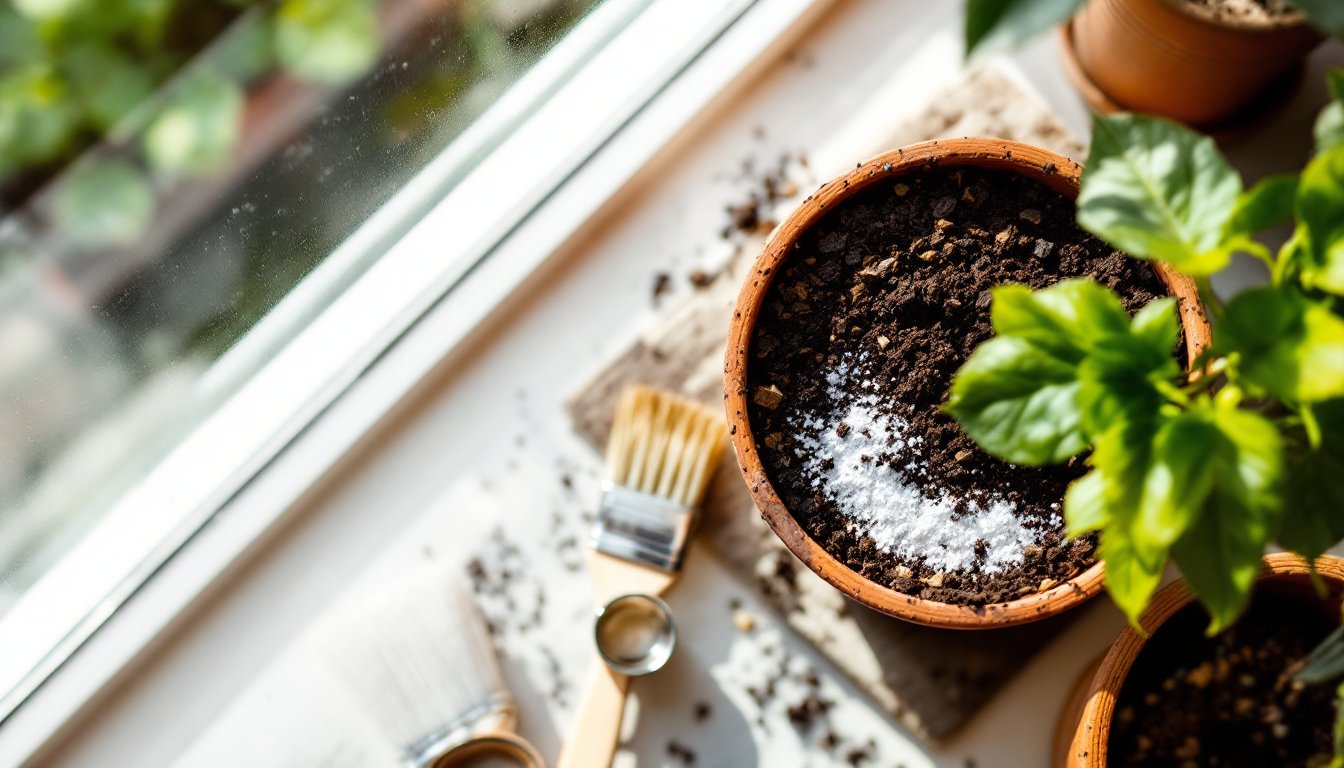
Diatomaceous earth (food-grade, not pool-grade) is a natural silica powder made from fossilized algae. It’s deadly to soft-bodied insects but safe for plants and humans in appropriate amounts. Sprinkle a 1/4″ to 1/2″ layer on top of the soil surface or mix 10-15% into the top 2 inches. Food-grade is essential, pool-grade has toxic additives.
Neem-treated soils contain neem oil, a natural pesticide that disrupts insect reproduction. Some commercial blends include this, though pest-free potting soil treatments explore this in detail if you want manufacturer recommendations.
A sample DIY bug-resistant mix: Combine 40% sterilized peat moss or coir, 30% perlite, 20% orchid bark, and 10% activated charcoal. If you add diatomaceous earth, use it as a top dressing rather than mixing it throughout, it works better on the soil surface where gnats lay eggs.
How To Prepare And Maintain Bug-Free Soil Long-Term
Choosing the right soil is step one. Maintenance and preparation prevent reinfestation.
Start with clean pots. Before repotting, scrub the container with a 1:10 bleach-to-water solution (or use 70% isopropyl alcohol) and let it dry completely. Any lingering soil debris can harbor pest eggs. Drain holes are non-negotiable, sitting water breeds gnats within days.
Water from the bottom when possible. Watering from above keeps the top inch of soil consistently wet, perfect gnat nursery. Bottom watering (placing the pot in a tray of water for 10-15 minutes) lets roots absorb moisture while allowing the surface to dry slightly. Dry surface = fewer gnats. Let excess water drain, and remove the pot from the tray once soil is uniformly moist.
Let tap water sit overnight before use. If your tap water contains chlorine, letting it sit 24 hours reduces chlorine content and allows the soil to settle. Chlorine-free water is gentler on the microbial community that helps suppress pests.
Monitor the top 2 inches religiously. This is where fungus gnats lay eggs. Pinch the soil, if it feels wet, don’t water. If it’s slightly dry to touch, water lightly. Once a week, inspect the surface for tiny black specks (adult gnats) or white debris (debris and eggs). Early detection is everything.
Refresh the top layer every 6-8 months. Remove the top 1-2 inches of old soil and replace it with fresh, sterilized mix. This physically removes accumulated organic debris and any dormant eggs or larvae. Think of it like changing the air filter in your home, preventative maintenance beats remediation.
Quarantine new plants. Before bringing a new houseplant into your collection, keep it separate for 7-10 days. Watch for pest activity in its soil. Many indoor plant problems come from buying infested plants at the nursery.
For most common house plants, these practices prevent 95% of pest issues. Different plants have slightly different water needs, succulents prefer drier soil, while ferns like consistent moisture, but the principle remains the same: good drainage, proper water timing, and clean materials eliminate the conditions pests need.
One final note: If you already have a gnat infestation, changing soil alone won’t be enough. You’ll need to address the adults and larvae. But, switching to a bug-resistant soil formulation as part of an integrated pest management approach (which might include sticky traps, reduced watering, or neem treatments) dramatically speeds recovery. Starting with clean soil prevents you from fighting this battle altogether.